Serving Birmingham & nearby
Transfer Switch Installation Birmingham
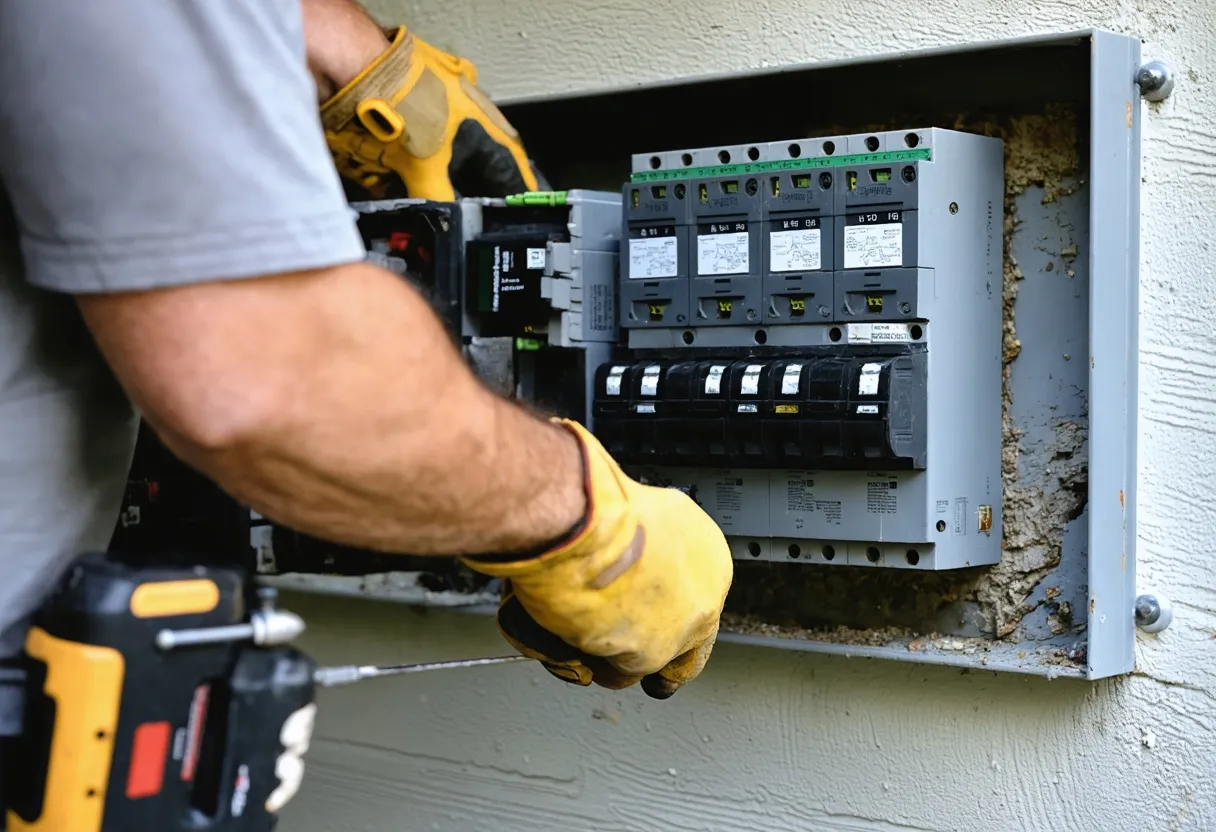
If you've already invested in a standby generator for your Birmingham home, the transfer switch is the piece of hardware that actually makes it work safely. Skip it, or get it wrong, and you're left with either a generator that can't power your house automatically or — far worse — a backfeed hazard that can injure utility linemen working to restore power on your street. Before you book a crew, we publish our actual Jefferson County installed-cost ranges, plain-language financing terms, and Alabama's real severe-weather outage risk right here, so you're deciding with facts instead of a sales pitch.
This page covers everything a Birmingham homeowner needs to know about transfer switch installation: how automatic and manual switches differ, what a proper installation involves, what drives the price up or down, how our licensing and process compare to a handyman "special," and what to expect from ongoing maintenance and warranty coverage. If you haven't sized a generator yet, our generator sizing guide is a good place to start before you commit to switch capacity.
Why a Transfer Switch Isn't Optional
A transfer switch is the electrical component that isolates your home's wiring from the utility grid the instant your generator kicks on, then reconnects you to the grid once utility power is restored. Without one, the only way to run a generator is to run extension cords through windows and doors — a setup that's inconvenient, limits you to whatever a handful of cords can reach, and can't legally or safely power your furnace, well pump, or HVAC system.
The bigger issue is backfeed. If a generator is connected to your home's wiring without a transfer switch — for example, by plugging into a dryer outlet with a makeshift cord — electricity can flow backward through your meter and out onto the utility lines. Those lines are normally dead during an outage, which is exactly when a utility crew is out working on them. Backfeed has killed linemen. It's the single biggest safety reason transfer switches exist, and it's why the National Electrical Code (NEC 700 and 701) and Alabama's adopted electrical code require an approved transfer switch for any generator that connects to a home's permanent wiring.
Beyond safety, a properly installed automatic transfer switch (ATS) gives you something a cordless setup never can: hands-off operation. When the power drops, the ATS senses the outage, signals the generator to start, and switches your home's load over — typically within 10-30 seconds — whether you're home, at work, or out of town. For anyone relying on a generator for medical equipment, a sump pump, or freezers full of food, that automation is the entire point of owning a generator in the first place.
Automatic vs. Manual Transfer Switches: What Birmingham Homeowners Actually Choose
Not every transfer switch works the same way, and the choice affects both your upfront cost and your day-to-day experience during an outage.
- Automatic transfer switches (ATS) monitor utility voltage continuously and start the generator, transfer the load, and switch back automatically once power returns — no human intervention required. These pair with standby generators and are the standard choice for whole-home backup.
- Manual transfer switches require someone to flip breakers or turn a selector switch by hand after starting a portable generator. They're less expensive and work fine for homeowners who only want to power a handful of circuits and don't mind managing the switchover themselves.
- Service-entrance rated automatic switches combine the transfer switch and main disconnect into a single enclosure, which can simplify installation and reduce labor on some panel configurations, but they need to be matched carefully to your utility meter setup.
Most of the installs we handle for full-home coverage are automatic switches paired with a standby generator, because the value proposition — power restored automatically whether you're asleep, at work, or out of town — is what homeowners are actually buying. If you're still deciding between whole-home coverage and a partial "essential circuits" setup, that decision affects switch amperage and is worth resolving before installation day; see our whole-home generator installation page for how full-house coverage compares to a smaller essential-circuits system.
Licensing and Credentials: What to Verify Before Anyone Touches Your Panel
Transfer switch installation isn't a project for an unlicensed handyman, and it shouldn't be treated as an afterthought tacked onto a generator sale. Because the work involves tying into your home's main electrical panel and, in most cases, coordinating with Alabama Power or your local utility for meter-adjacent equipment, it needs to be done by installers who hold current Alabama electrical licensing and who pull the required local permit.
When you're vetting an installer — whether it's us or someone else — ask directly about:
- State of Alabama electrical contractor licensing, and whether the individual doing the work (not just the company) is credentialed.
- Manufacturer-level certification, such as Generac's dealer tiers (including Elite Plus status), which indicates factory training on transfer switch wiring, load center integration, and startup/commissioning procedures specific to that equipment.
- Whether the installer pulls a permit and schedules a local electrical inspection, rather than treating code compliance as optional.
- General liability insurance and workers' comp coverage, so you're not liable if something goes wrong on your property during the install.
A transfer switch installed without a permit can create real problems down the line — from insurance claims being denied after a fire or flood, to complications when you sell the home and a buyer's inspector flags unpermitted electrical work. It's worth the extra few days for permitting rather than the risk of unwinding a code violation later.
How the Installation Process Actually Works
A transfer switch installation isn't a single afternoon task done in isolation — it's the final integration step in a larger generator installation sequence, and each stage affects the ones after it.
1. Electrical Load Analysis
Before any equipment is selected, we walk the property and review your electrical panel to calculate your home's actual running and starting loads. This means accounting for large draws like central AC compressors, electric water heaters, well pumps, and electric ranges, since these have startup surges well above their running wattage. This step determines whether you need a switch sized for your whole panel or one sized for a curated set of essential circuits.
2. Generator Sizing and Switch Matching
The transfer switch amperage has to match both your generator's output and your home's service size (commonly 200-amp for Birmingham-area homes, though older homes may still run 100- or 150-amp service). Undersizing the switch creates a bottleneck that limits how much of your home the generator can actually power, even if the generator itself has capacity to spare. If you haven't settled on generator size yet, our generator sizing guide walks through the wattage math in detail before we're on-site.
3. Transfer Switch Integration
This is the physical work: mounting the transfer switch enclosure (typically adjacent to or near your main panel), running conduit and wiring between the switch, the panel, and the generator's designated location outside the home, and wiring the switch's transfer mechanism into the circuits it will control. For whole-home service-entrance switches, this can include coordination with the utility meter base. Every connection is torqued to manufacturer spec and labeled clearly, since a poorly labeled panel makes future service work slower and more error-prone.
4. Code Compliance, Permitting, and Inspection
We pull the required electrical permit before work begins and schedule the local jurisdictional inspection once installation is complete. Inspectors check grounding, bonding, conduit sizing, clearances around the generator and panel, and that the transfer switch prevents any possibility of backfeed. This step exists to protect you — it's the difference between a system that's genuinely code-compliant and one that merely looks finished.
5. Startup, Testing, and Homeowner Walkthrough
Once the inspection clears, we run a live test: simulating a utility outage to confirm the generator starts, the switch transfers the load within its rated window, and power flows correctly to every circuit it's supposed to cover. We walk you through manual override procedures, the exercise schedule your generator will run automatically, and what to do (and who to call) if something doesn't look right after we've left.
What Drives the Cost of Transfer Switch Installation in Jefferson County
Transfer switch installation cost isn't one flat number, and quotes that give you a single all-in figure without breaking down the components make it hard to know what you're actually paying for. Here's how the major cost factors typically break down for Birmingham-area homes:
- Switch amperage and type — a 100-amp automatic switch for an essential-circuits setup costs meaningfully less than a 200-amp whole-home service-entrance rated switch, since the hardware itself scales with capacity.
- Distance between generator, switch, and main panel — more conduit run and wire length means more labor hours and material, especially on homes where the panel is on the opposite side of the house from the best generator pad location.
- Panel condition and age — older panels (fuse-based or outdated breaker panels common in some established Birmingham neighborhoods) sometimes need upgrades or a subpanel added before a transfer switch can be integrated cleanly.
- Permit and inspection fees — these vary by municipality within Jefferson County and are a fixed cost regardless of installer, but should always be itemized separately rather than buried into a labor line.
- Trenching or conduit routing — if wiring needs to run underground or through masonry/brick exteriors (common on older Birmingham and Mountain Brook-area homes), that adds labor beyond a straightforward surface-mount run.
- Utility meter coordination — service-entrance rated switches that interface with the meter base sometimes require utility company scheduling, which can add calendar time even when it doesn't add much cost.
We itemize each of these on the quote rather than rolling everything into one number, specifically so you can see what you're paying for and compare it against other bids apples-to-apples. If a competing quote is a single lump sum with no breakdown, ask them to itemize it — that's usually where padding hides.
Financing Options
Because a full generator-and-transfer-switch installation is a meaningful home investment, we offer financing plans that let you spread the cost over monthly payments rather than paying the full installed cost upfront. Terms and approval depend on the lender and your credit profile, and we'll walk through actual monthly numbers — not just a teaser rate — before you sign anything. If storm season is approaching and budget is the thing standing between you and a working backup system, ask about financing during your quote call rather than after; it's often easier to structure into the original project scope.
24/7 Emergency Service, Repair, and Troubleshooting
Transfer switches and generators are mechanical and electrical systems, and like any such system, they can develop faults — a stuck relay, a failed transfer signal, a nuisance fault code, or a switch that doesn't fully seat during transfer. When that happens during a storm, waiting until Monday morning isn't an option.
We provide 24/7 emergency service for exactly this reason. Common issues we troubleshoot include:
- Generator starts but the transfer switch doesn't engage (often a control-wiring or signal fault between the two).
- Switch transfers to generator power but fails to transfer back once utility power is restored.
- Intermittent or nuisance transfers during brief utility voltage sags rather than true outages.
- Corrosion or loose connections inside the switch enclosure, which is more common in switches that weren't sealed correctly during initial installation.
- Battery or control-board failures on the automatic switch itself, separate from the generator's own battery.
If your existing transfer switch was installed by another company and isn't behaving correctly, we also diagnose and repair systems we didn't originally install — you don't need to have used us for the original job to call us when something's wrong.
Maintenance Plans: Keeping the System Ready Before You Need It
A transfer switch that hasn't been inspected in years is a common reason generators fail to perform when a storm actually knocks out power — the generator itself might run fine on a test cycle, but a corroded contact or a control fault in the switch can prevent the transfer from happening at all. We offer maintenance membership tiers that include periodic inspection of the transfer switch's connections, contacts, and control wiring alongside standard generator service (oil changes, battery checks, exercise cycle verification).
Membership plans typically differ by visit frequency (annual vs. biannual), priority scheduling during storm season when service calls spike, and whether parts and minor repairs are discounted or included. The right tier depends mostly on your generator's usage pattern and how much you value guaranteed priority response when a large storm system is forecast — we'll walk through the tier differences and what's actually included in each during your quote so you're not guessing at what "membership" gets you.
Warranty and Satisfaction Guarantee
Installation workmanship is backed by our labor warranty, separate from the manufacturer's warranty that covers the transfer switch and generator hardware itself. Manufacturer warranty terms vary by equipment tier and whether the unit is registered promptly after installation — we handle registration as part of the installation process so the clock starts correctly and you're not left to track down warranty paperwork after the fact. If something about the installation itself isn't right, we stand behind the workmanship and will come back to make it right rather than treating the job as done the moment the inspector signs off.
Serving Birmingham and the Surrounding Suburbs
We install and service transfer switches throughout Birmingham and the surrounding Jefferson and Shelby County communities, including Mountain Brook, Vestavia Hills, Homewood, Hoover, and Pelham. Housing stock varies a lot across these areas — from older brick homes with panels that sometimes need upgrading before a switch can be integrated, to newer construction with modern 200-amp service that's straightforward to work with — and our load analysis accounts for that variation rather than applying a one-size-fits-all quote across every neighborhood.
If you're not sure whether your specific address falls inside our standard service radius, ask when you request a quote — we'll tell you plainly rather than stringing you along through a sales call first.
Alabama Storm Season and Why Timing Your Installation Matters
Central Alabama has a defined severe storm and high-wind season, and outages tied to that season are the entire reason most Birmingham homeowners look into standby power in the first place. The problem is that installation timelines stretch during peak demand — permitting offices get backed up, generator inventory tightens, and installers with more requests than crews start booking weeks or months out. Homeowners who wait until a storm is in the forecast to start the process are often stuck waiting until after that storm has already come and gone.
Scheduling your load analysis and installation ahead of the season — rather than reactively after your neighborhood's power has already gone out once — is the single biggest factor in whether your system is actually operational when you need it. If you're weighing whether now is the right time to move forward, treat "before storm season peaks" as the deadline that matters, not an arbitrary sales push.
What Birmingham Homeowners Value Most
The feedback we hear most consistently from homeowners after installation isn't about the generator itself — it's about the transfer switch working exactly as expected the first time the power actually goes out: no manual intervention, no confusion about which circuits are covered, no surprise about how the system behaves. That's the entire design goal of a properly commissioned automatic transfer switch, and it's why we treat the testing and walkthrough step as seriously as the wiring itself. We'd rather you know exactly what your system does and doesn't cover before an outage than find out during one.
Get Your Itemized Quote
Free, no-obligation pricing broken down line by line — no pressure to decide today.
More generator installation services
Don't Wait for the Next Outage
Get an itemized generator quote now and be ready before Central Alabama's next storm season hits.