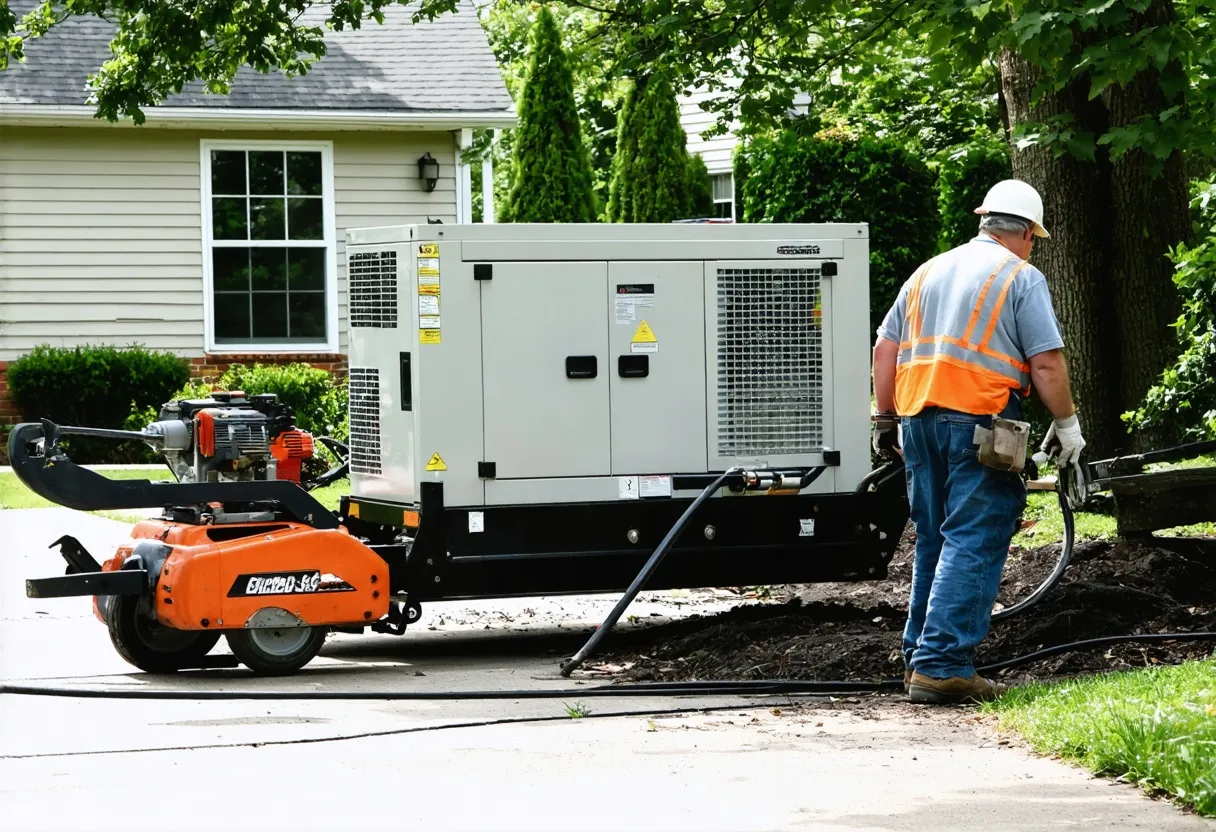
If you own a standby generator in Birmingham, the machine sitting in your side yard is only as reliable as its last service visit. A generator that hasn't been maintained is a generator that fails to start during the exact ten-minute window when a Central Alabama storm knocks out your block's power. Generator maintenance in Birmingham is not an optional add-on to installation — it's the difference between a system that carries your home through an outage and one that sits dead in the yard while your neighbors run on gas. Before you book anything, you should be able to see what a tune-up actually includes, what it costs installed and serviced in Jefferson County, and what your financing options look like — all before a single sales call. That's the whole premise of this page.
We built our maintenance program around plain-language pricing and Alabama-specific storm data because homeowners here don't need a sales pitch — they need to know their generator will crank when the grid goes down. Whether you're comparing generator maintenance plans in Birmingham, AL or you just need a one-time standby generator tune-up in Birmingham before storm season, this guide covers what the service includes, how the process works, what drives the cost, and how to pick a provider you can actually trust with a machine that only has to work once a year — but has to work that one time.
Why Generator Maintenance Matters More in Birmingham Than Almost Anywhere Else
A standby generator is a small engine that spends 360-plus days a year sitting idle, then gets asked to start instantly and carry your home's electrical load without warning. Engines that sit unused develop stale fuel, corroded battery terminals, cracked hoses, and clogged air filters — all invisible problems until the moment you need the unit most. Routine maintenance is what catches those failures on a Tuesday afternoon instead of during a Thursday-night thunderstorm.
Central Alabama sits squarely in a severe storm and high-wind season that brings recurring risk of thunderstorm outages, downed lines, and occasional tornadic activity, which means standby power isn't a luxury item here — it's closer to a utility. Homeowners in this market aren't buying generators to hedge against a rare once-a-decade ice storm; they're buying them because the outage risk is a recurring seasonal reality. That reality is exactly why a generator that fails to self-test, fails to crank, or trips on load the first time it's actually needed is such a costly problem — not in generator cost, but in the days of spoiled food, sump pump failure, and medical-equipment risk that follow.
The Safety Case for Keeping a Generator Serviced
Beyond convenience, a poorly maintained generator is a genuine safety hazard. Improperly serviced units can leak carbon monoxide, develop fuel line cracks that create fire risk, or fail to properly isolate from the utility grid during an outage — a backfeed condition that can injure utility line workers. A functioning automatic transfer switch, clean exhaust path, and verified grounding connection aren't cosmetic details; they're the components that keep a generator from becoming a liability instead of a safeguard. Maintenance visits exist specifically to verify all of that before it becomes an emergency.
What a Professional Generator Maintenance Visit Actually Covers
A real tune-up is a documented, multi-point service — not a quick glance and an invoice. Here's what should happen at every visit:
- Oil and filter change using the manufacturer-specified weight and filter, checked against engine hours rather than just the calendar
- Air filter inspection and replacement to keep combustion efficient and prevent premature engine wear
- Spark plug inspection (gas/propane units) for fouling, gap, and wear
- Battery load test and terminal cleaning — the single most common cause of a "no-start" standby generator is a weak or corroded battery
- Fuel system inspection, including line integrity, connections, and regulator function for natural gas and propane units
- Coolant level and condition check on liquid-cooled units
- Automatic transfer switch (ATS) test to confirm the switch properly senses a utility outage and transfers load without hesitation
- Exercise cycle verification to confirm the unit's self-test schedule is actually running and logging clean starts
- Full load-bank or simulated-load test so the generator is verified under an actual electrical load, not just idling
- Exhaust, enclosure, and rodent/insect intrusion check — a surprisingly common cause of blocked airflow and wiring damage in outdoor units
- Firmware and controller diagnostics to check for stored fault codes before they turn into a failure-to-start event
Every item gets documented on a written report, not just verbal reassurance, so you have a record of exactly what was checked, what was replaced, and what to watch heading into the next storm season.
Generator Maintenance Plans and Membership Tiers in Birmingham
Not every homeowner needs the same level of coverage, which is why maintenance plans are typically structured in tiers rather than a single one-size offer. A sensible way to think about the tiers:
- Basic annual tune-up — a single scheduled visit per year covering the core service items above, best for newer units still under manufacturer warranty and lighter-use homes.
- Standard membership (typically two visits per year) — service scheduled before and after storm season, priority scheduling ahead of severe weather events, and a discount on any parts needed during the visit.
- Premium/priority membership — two-plus visits annually, priority emergency dispatch during widespread outage events, discounted repair labor, and often a small parts-and-labor allowance built into the plan.
The right tier mostly comes down to how much risk tolerance you have for a delayed service appointment during a regional storm event, when every generator company in Jefferson County is fielding calls at once. Membership plans exist largely to buy you a place in line before that line forms.
Licensing, Credentials, and Why That Matters for a Machine Wired Into Your Panel
A standby generator isn't a small appliance — it's a piece of equipment tied directly into your home's electrical panel through a transfer switch, typically fed by a dedicated gas or propane line. That means the technician working on it should carry real credentials, not just a company shirt.
Look for a provider holding manufacturer-level certification — a Generac Elite Plus Dealer designation, for example, indicates a level of factory training, parts access, and warranty authorization above a general handyman-level installer — combined with Alabama state electrical and/or HVAC/gas certification appropriate to the work being performed. Maintenance work that touches fuel lines, electrical connections, or transfer switch wiring should always be performed by someone licensed to do that work in this state, not simply "generator-familiar." Ask directly for license numbers and manufacturer certification before you let anyone open your generator's enclosure.
How the Maintenance Process Works, Step by Step
A properly run maintenance visit follows a consistent sequence rather than an ad-hoc checklist:
- Scheduling and history review. Your technician should pull the generator's model, install date, and prior service history before arriving, so the visit isn't starting from zero.
- Visual and enclosure inspection. Checking the physical unit, mounting pad, clearances, and enclosure for pest intrusion, corrosion, or storm damage since the last visit.
- Engine and electrical servicing. Oil, filters, spark plugs, battery, and wiring connections are checked and serviced per the maintenance checklist above.
- Transfer switch and load testing. The ATS is cycled and the unit is run under a simulated load to confirm it can actually carry your home's circuits, not just idle in neutral.
- Code and clearance compliance check. Confirming the installation still meets current setback, ventilation, and electrical code requirements — this matters especially on older installs that predate current code revisions.
- Documentation and homeowner walkthrough. You get a written summary of what was serviced, any parts replaced, and any red flags to plan for before the next visit.
This same disciplined process is what underlies a proper new installation, too — a correctly sized generator, matched to a load analysis of your home's electrical demand, wired through a code-compliant automatic transfer switch. If you're earlier in that process and haven't installed a unit yet, our generator installation FAQ for Birmingham homeowners walks through sizing, permitting, and what installation day looks like.
What Affects the Cost of Generator Maintenance in Birmingham
Transparent, itemized pricing is the whole point of doing this up front rather than after a technician is already standing in your driveway. Several factors move the price of a maintenance visit up or down across Jefferson County:
- Generator size and fuel type — a 22kW whole-home standby unit takes longer to service than a small portable-transfer setup, and propane systems have an added regulator/tank inspection step that natural gas units skip.
- Time since last service — a unit that's gone two-plus years without maintenance often needs additional parts (batteries, filters, belts) beyond the standard tune-up scope, which adds to the visit.
- Access and site conditions — units tucked behind fencing, landscaping, or in tight side-yard placements can add labor time versus an open-pad installation.
- Membership tier — plan members typically pay a lower per-visit rate than one-time tune-up customers, since the visit cadence is scheduled in advance rather than dispatched reactively.
- Parts needed at time of service — batteries, air filters, and spark plugs are consumable items that get replaced on a normal wear cycle; a good provider itemizes these separately rather than folding them into a vague flat fee.
Ask any provider to itemize the visit before they arrive: labor, standard consumables, and any diagnostic add-ons should each be a separate line, not a bundled "service fee." That itemization is exactly what should be published before you ever get on a call — not negotiated after a technician has your generator apart.
Financing Generator Maintenance and Repair Work
Routine maintenance visits are usually affordable enough to pay out of pocket, but larger repair work — a failed control board, a transfer switch replacement, or a full engine service after years of neglect — can add up quickly. Plain-language financing means understanding, before you commit, whether you're looking at a same-as-cash short-term plan, a fixed monthly payment plan, or a promotional no-interest period, and exactly what happens if a payment is missed. A provider worth hiring will walk you through the actual terms — APR, term length, and any deferred-interest fine print — rather than just quoting a low monthly number and moving the conversation along. If a repair estimate is more than routine maintenance, ask for the financing terms in writing before authorizing work, the same way you'd ask for an itemized cost breakdown on the maintenance visit itself.
Generator Repair and Troubleshooting
Maintenance catches most problems before they become failures, but generators still break between visits — a dead battery in July heat, a failed transfer switch relay, a fault code that won't clear. Common issues our technicians troubleshoot include no-start conditions, units that start but won't transfer load, error codes on the controller display, fuel delivery problems, and units that fail their weekly self-exercise cycle. If your generator is throwing a fault code or failed its last self-test, don't wait for the next scheduled maintenance visit — a unit that won't start during a test won't start during an actual outage either. Our generator repair services in Birmingham page covers diagnostic pricing and typical turnaround times for the most common failure modes.
24/7 Emergency Availability
Storms in Central Alabama don't wait for business hours, and neither should generator support. When a unit fails to start right as a line of severe weather is rolling through, or trips offline mid-outage, you need a provider that answers the phone at 2 a.m., not a voicemail promising a callback next business day. Emergency dispatch during active outage events is one of the clearest reasons to have a maintenance relationship with a provider before the storm hits, rather than searching for anyone available once the power's already out and every company in the metro is swamped with calls. See our emergency generator service page for what to expect from a same-day or overnight dispatch call.
Warranty and Satisfaction Guarantee
Maintenance work should stand behind itself. That means workmanship on any service visit is covered against defects for a defined period after the visit, and any parts installed — batteries, filters, belts — carry the manufacturer's standard part warranty in addition to labor coverage on the installation of that part. If a generator is still under its original manufacturer warranty, using a certified dealer for maintenance is what keeps that warranty intact; skipping documented maintenance, or having non-certified technicians service the unit, is one of the most common ways homeowners unknowingly void manufacturer coverage on an otherwise-healthy generator.
Service Area Across Greater Birmingham
Generator maintenance and repair service is available throughout the Birmingham metro, including Mountain Brook, Vestavia Hills, Homewood, Hoover, and Pelham, along with the surrounding Jefferson County communities. Coverage across these suburbs matters because response time during an active outage is one of the most important variables in whether standby power actually does its job — a generator company based on the far side of the metro isn't much help when a storm knocks out power across several neighborhoods at once and every truck is stretched thin.
Get Your Itemized Quote
Free, no-obligation pricing broken down line by line — no pressure to decide today.
More generator installation services
Don't Wait for the Next Outage
Get an itemized generator quote now and be ready before Central Alabama's next storm season hits.